
The Often-Missed Aspects of a Great Sale
With Sales Expert, Lance Imburgia
Lance Imburgia, Senior Marketing Consultant at Postcard Mania, peels back the layers of the onion of what makes a great sale—and determines a great sales rep.
What’s the biggest lie the sales industry still tells new reps about “hustle culture,” and how does it hurt their long-term success?
67% of salespeople report being close to or currently experiencing burnout.
Let me be clear: I’m not anti-hustle. When you’re new to a role, hustle is often necessary and even good. You need to generate momentum, get the plane off the ground, and prove to yourself and to your organization that you can produce. In the early stages, working longer and harder than everyone else is a reasonable strategy.
The lie isn’t that hustle works. The lie is that it should be your permanent operating mode, a fixed gear you never shift out of, held up as the model every ambitious rep should emulate indefinitely.
The reality is that conditions in sales are fluid. What you need at launch is not what you need at scale. The reps who conflate starting intensity with sustainable strategy are the ones who flame out fastest. And the numbers back this up: sales burnout costs organizations an estimated $190 billion annually in lost productivity and turnover and replacing a burned-out rep who leaves can cost anywhere from 30% to 400% of their annual salary.
The secret is sustainability. Real growth requires a deliberate transition from quantity (activity, volume, output) toward quality: deeper relationships, better qualification, and smarter use of your time and energy. The best reps learn to toggle between these modes as the situation demands. They hustle when the moment calls for it. They build when the foundation is in place.
Treat hustle as a tool, not an identity. Know when to apply it and, just as importantly, when to put it down.
When a prospect says they need to think about it, they’re not being polite. They’re telling you something critical: You haven’t yet made the ROI obvious enough for them to decide on the spot.
What’s one sales objection that changed your entire approach to closing deals?
“I need to think about it.”
Sounds harmless. But the day I truly understood what that phrase means was the day my closing rate changed permanently.
When a prospect says they need to think about it, they’re not being polite. They’re telling you something critical: You haven’t yet made the ROI obvious enough for them to decide on the spot. At some later point, they’re going pull out their notes, your proposal, or your deck, and try to figure out for themselves whether what you’re selling is worth buying. You’ve just handed your sale to someone who wasn’t in the room.
Too many reps lead with features, benefits, or competitive positioning. These things matter, but they don’t close deals. What closes deals is getting granular on the prospect’s actual problem. Not a surface-level problem. The real one, with real stakes: Why does this problem exist? What happens if it goes unsolved? What is it costing them in dollars, time, opportunity, stress, or freedom?
Research shows that top-performing reps respond to objections with clarifying questions more than 54% of the time—compared to just 31% for average performers. The best reps don’t rush to answer objections. They dig deeper into them.
When you do this work correctly, when you’ve established the full weight of the problem before you ever ask for the close, the decision becomes obvious. There’s nothing to think about. The conversation shifts from “yes or no” to “how fast can we get started?” That’s where you want to be.
SUBSCRIBE TO OUR FREE MONTHLY NEWSLETTER
What sacred cow of traditional sales training would you burn down for the next generation?
“Always Be Closing.”
It’s one of the most famous mantras in sales, and one of the most counterproductive. Here’s the problem with ABC: Nobody wants to be closed or sold. Everyone wants to buy. The moment a prospect senses that you’re closing them, they feel pressure. And pressure creates resistance.
The better principle, one that actually works naturally, is Always Be Helping.
When a rep shows up as a genuine consultant, someone who is focused on understanding the prospect’s situation and offering real solutions, something shifts. The prospect stops being guarded. They open up. And because trust is now in the room, the rep can say almost anything without triggering defensiveness.
In a help-first frame, the sales conversation becomes a series of natural agreements: “Yes, that’s a problem.” “Yes, that would solve it.” “Yes, this makes sense.” By the time you ask for the business, the prospect isn’t being closed. They’re simply confirming what they already know is the right move.
The close is not the climax. It’s the logical conclusion of a conversation that was never adversarial to begin with. Kill ABC. Replace it with a mindset of service, and watch what happens to your conversion rates.
How do you spot a rep who’s destined to burn out versus one who’ll scale to seven figures?
This is one of my favorite things to assess in an interview, because the signals are there. if you know where to look.
Are they genuinely interested? Not interesting, but interested. There’s a meaningful difference. Most people walk into interviews trying to be interesting. They’re broadcasting. But great reps are receivers first. Watch how they listen. Do they lean in? Do they ask follow-up questions that reveal they actually processed what you said? Interest in other people is the root skill of sales. It’s what makes prospects feel understood rather than sold to.
How do they handle pushback? I use a test I love: I ask them to tell me about something they’re passionate about—cooking, sports, travel, anything. Then I deliberately say something wrong about that subject, with conviction. I want to see what happens. Do they fold? Get defensive? Stumble? Or do they gracefully accept the challenge, engage with my position, and bring me around to theirs without making me feel stupid for being wrong? That ability to handle a counter-effort calmly and persuasively is the essence of objection handling.
Can they instill belief? Before any purchase, a prospect takes a leap of faith. They don’t yet know if what you’re selling will truly work for them. Your rep has to bridge that gap for them with confidence, credibility, and genuine conviction. That quality shows up in the way a person carries themselves, communicates, and makes others feel. You can hear it in the interview room.
If you could mandate one “non-sales” habit for every new rep—like reading fiction weekly—what would it be and why?
Find something you love outside of work and protect that time fiercely.
I think about great sales reps the same way I think about professional athletes. The job is high-stakes, emotionally volatile, and relentlessly competitive. You have wins that feel incredible and losses that hit hard. Day after day, week after week. That’s a lot for a human system to absorb.
Professional athletes don’t play 365 days a year. They train. They rest. They have recovery built into the system. Sales reps need the same thing, not as a luxury, but as a performance strategy. The reps who bring the most energy and creativity to the game are almost always the ones who know how to step away from it.
Whether it’s music, cooking, hiking, sport, or something else entirely, pursue it. Not to be well-rounded. To be ready. You’ll come back to the field sharper, more present, and more resilient than the person who never left it.
What’s an unethical sales tactic you’ve seen work short-term but destroy careers long-term?
Overpromising. Knowingly telling a prospect that the product or service will do something it won’t, or will perform at a level it can’t, just to close the deal.
It works. In the short term, it works remarkably well. The prospect gets excited. The deal closes. The commission clears.
And then reality arrives. The product doesn’t deliver what was promised. The client is disappointed, sometimes furious. Relationships break down. Referrals dry up. Word travels, especially in tight industries where everyone knows everyone. The rep who built their book of business on inflated promises finds themselves constantly starting over, burning bridges behind them faster than they can cross new ones.
Trust is the only durable currency in sales. Once you spend it, you don’t get it back. The reps who last, who build real books of business over 10, 20, 30 years, are the ones whose clients feel, even years later, that they were treated honestly.
There are many ways an organization has financial losses. Most think of losses in bad hires, equipment, even marketing. The greatest loss of income is really this: revenue that should have been brought in but was missed.
How do you train reps to spot the easy-to-miss areas where clients can maximize their investments?
Start by reframing how reps and prospects think about loss.
Most organizations, when they think about financial losses, think about obvious costs: bad hires, broken equipment, failed campaigns. What they almost never put a number on is the revenue they should have brought in but didn’t. The missed deals. The unfilled pipeline. The quota that kept slipping. That’s often the single biggest financial leak in the business, and it’s invisible precisely because it never showed up on an invoice.
When you help a prospect calculate that number, the specific dollar value of revenue they’re losing every month by not solving the problem your product addresses, the conversation changes completely. Suddenly, what you’re selling isn’t a cost. It’s the cheaper option. It pays for itself. The close becomes a math problem with an obvious answer.
Train reps to ask: “What would it mean for your business if this problem were solved, in real numbers?” Get granular. Get specific. That’s where deals are won.
What’s one emerging tech (beyond AI) that’ll separate top 1% reps from the rest by 2030?
The technology itself may still be taking shape, but it is already clear that those who use data not just to report on what happened, but to predict and influence what happens next are going to benefit greatly.
Intent data platforms, advanced conversation intelligence tools, and real-time buyer signal tracking are allowing the best reps to know when a prospect is actively researching, when they’re comparing alternatives, and when the timing is right to reach out. The reps who harness this, who can act on behavioral signals before a prospect even raises their hand, will have an advantage that’s very hard to beat through effort alone.
What failure in your career taught you more about sales leadership than any win?
Placing too much weight on the wrong hiring criteria.
For a period earlier in my career, like many sales leaders, I put significant emphasis on industry experience, education, and assessment scores when evaluating candidates. These aren’t worthless indicators. But I was letting them rank too high in my hierarchy of consideration, and it cost me.
The hard lesson: none of those credentials matter much if the person can’t communicate. And I mean communicate at the highest level, listening with genuine interest, presenting ideas with clarity and conviction, handling resistance without becoming defensive or collapsing. Sales, at its core, is the art of communication. Everything else can be trained. Product knowledge can be taught. Industry context can be absorbed. Processes can be learned.
But a rep who lacks elite communication skills will struggle regardless of their resume. And a rep who possesses them will find a way to succeed in almost any environment. When I restructured my hiring process around communication ability as the primary filter and let experience and credentials serve as secondary signals – the quality of my teams improved dramatically.
Hire for the skill that can’t be easily taught.
Teach everything else.
Share this on:
About Lance Imburgia
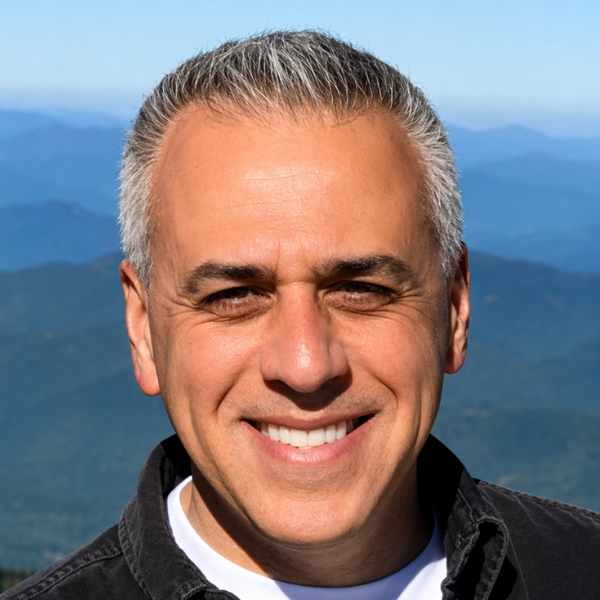
A seasoned leader with over 30 years of experience in marketing, research, and sales management, Lance specializes in cultivating high-performing teams through a ‘help-centric’ coaching philosophy. By leveraging data-driven insights from his background, he provides teams with the strategic tools necessary to navigate complex markets and deliver authentic, value-based service. This unique consultative mentorship transforms sales performance, driving both sustainable company growth and enduring client partnerships.