
Marketing to Veterans and Veterans in Marketing
With Veteran and Social Media and PR Specialist, Shawn Simmons
You’ve had a wide range of experiences with public relations and social media including U.S. Naval public affairs. Can you tell us about the journey?
It’s definitely been a ride. I started in the Navy as a Yeoman—basically handling all things administrative. While stationed at a flag command, I crossed paths with a stellar Sailor, Journalist Petty Officer 1st Class (Ship’s Writer) Steven Bansbach. He was sharp, knew his craft, and led with quiet confidence. I told him I was interested in public affairs, and he didn’t hesitate—he took me under his wing.
He introduced me to our Public Affairs Officer, Captain Randy Britton, who gave me my first real shot: covering a reenlistment ceremony aboard the USS Constitution for a group of Sailors just back from deployment. I wrote the story, interviewed re-enlistees, snapped the photos—the whole nine yards. That assignment lit the fuse.
After separating from the Navy, I knew I wanted to keep going. I got into Emerson College’s Global Marketing Communication and Advertising master’s program, which opened up the world—literally. I ended up in Beijing, launching CGTN News Content’s Public Relations division, building strategy, press releases, and even a multilingual digital exchange from the ground up. From there, I dipped into fashion PR, finance, lifestyle branding, and veteran hiring campaigns. It’s been anything but boring.
SUBSCRIBE TO OUR FREE NEWSLETTER
You’ve had a role marketing to veterans. Are there any ways that veterans, as a demographic, differ from other audiences in terms of what resonates with them?
Absolutely—and it’s all in the approach. Veterans (and transitioning service members) tend to process things differently. We don’t just scroll and move on. If something catches our eye, we’ll sit with it, revisit it, and maybe even reach out days later with questions. We want to ask smart questions and not waste anyone’s time. We also tend to avoid fluff. Direct, clear, actionable content resonates. Tell us what the opportunity is, how to get there, and what’s real versus hype. We’re not looking for abstract theories or “inspirational vibes”—we want tangible steps to secure a right-fit opportunity. Just give it to us straight.
What are some examples of marketing campaigns or journalism that have authentically connected with veteran audiences, and what set them apart?
For veterans, it’s all about real recognizing real. We want to see people who’ve walked the walk—folks who’ve laced up boots, faced setbacks, and figured out how to build something after service. When they speak our language, whether it’s acronyms, call signs, or shared experience, it builds instant credibility. The campaigns that stick show us the “after” story: veterans thriving as business owners, educators, community leaders. It’s not just about nostalgia for the uniform—it’s about seeing what’s possible next. Those stories remind us that service doesn’t end with a DD-214; it just shifts into a new gear.
Show the veteran who’s coding in a startup, who’s teaching in a classroom, who’s designing sustainable tech. Our stories are diverse. Let them breathe.
How can journalists and marketers better listen to and reflect veterans’ voices in their work, beyond surface-level symbolism or patriotic themes?
Here’s the thing: too often, veterans get cast as one-dimensional action heroes. Yes, we train for war—but we also invent, strategize, and build systems that civilians use every day. GPS? The military. The EpiPen? Same. Night vision, duct tape, even the internet’s earliest form—military origins. We’re problem solvers. We think five moves ahead. So if you want to reflect our voices, go beyond the camo shots and honor guards. Show the veteran who’s coding in a startup, who’s teaching in a classroom, who’s designing sustainable tech. Our stories are diverse. Let them breathe.
Let’s talk about veterans who are starting careers in marketing and communications. What unique strengths do veterans bring to roles in this industry?
Veterans are trained to make things happen with limited time, unclear instructions, and high stakes. We’re natural problem solvers, adaptable as hell, and know how to lead and follow depending on the mission. Public affairs folks in the military? They’re a one-person comms shop—handling interviews, writing stories, snapping photos, editing videos, analyzing engagement data. We learn fast, think strategically, and know how to get it right the first time. In marketing and communications, that mindset is gold.
What are some common misconceptions about veterans working in the marketing industry, and how can employers and agencies move past them?
One common one? That veterans are rigid, or worse, all dealing with PTSD. It’s lazy thinking. Another is that a résumé with diverse roles across sectors signals confusion or lack of focus. But in reality? It shows agility, curiosity, and a team-first mindset. Veterans are used to filling gaps when resources are tight. We don’t say, “That’s not my job.” We say, “What does the team need?” Also, we tend to say “we” instead of “I.” It’s not about downplaying contributions—it’s just how we operate. If you value collaboration and initiative, veterans bring it in spades.
Your path might not be linear—and that’s okay. But understanding your “why” helps you map out your “how.”
What advice would you offer to veterans looking to enter marketing or related fields, especially those who may be hesitant about making the transition?
My advice? Start by figuring out what drives you. If agency life sounds intriguing, go for it early. Agencies often hesitate to bring in mid-level folks without prior agency experience—so if you’re curious, explore it now. Also, think about your long game. Where do you want to make an impact? Your path might not be linear—and that’s okay. But understanding your “why” helps you map out your “how.”
A lot of people are trying to figure out how they want to represent themselves professionally on social media. You’re vulnerable and honest. How did you find your voice?
I found my voice by sharing parts of my story with trusted peers—people who reminded me that vulnerability isn’t weakness, it’s connection. Their encouragement helped me see that my truth could help someone else feel seen or less alone. On social media, I try to show up as a full human, not just a résumé, not just a highlight reel. That authenticity helps build trust and makes you approachable. We’re all just doing our best out here—so why not lead with realness?
Share this on:
About Shawn Simmons
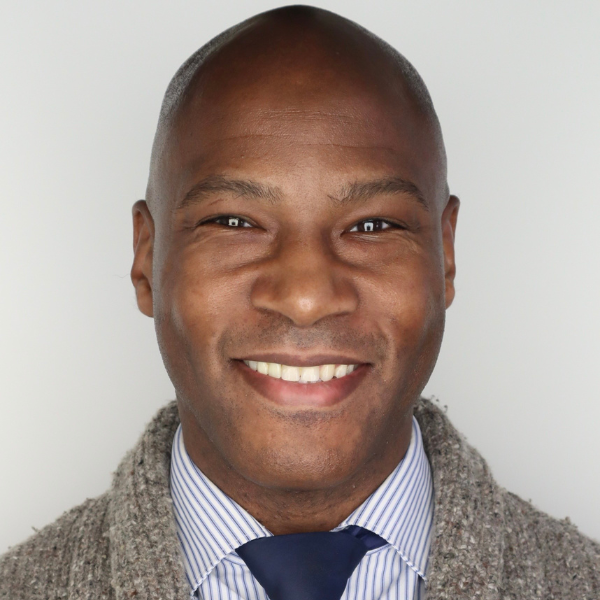
Shawn Simmons is a communicator and connector who believes in storytelling’s power to move communities forward. After active duty in the U.S. Navy and earning graduate degrees in global marketing and public administration, he launched The Simmons Brand to help companies craft purpose-driven narratives. He has since led communications strategies for global media, finance, talent, and lifestyle organizations, recently completing a Doctor of Education in Organizational Change and Leadership at the University of Southern California. Passionate about community, Shawn now seeks his next opportunity to pair research-driven insights with creative leadership.