
Starting Out in Marketing and PR in the Age of AI
With Career Coach, Liz Herrera
Liz Herrera, career development expert, discusses today’s job market for newly graduated Marketing and PR job seekers and how they can get ahead despite the disruptions of AI.
You’re the Director of Career Development in the College of Liberal Arts and Sciences at the University of Illinois Chicago and a career coach. What makes you so passionate about helping people with their careers?
I believe people should pursue careers that align with their values, strengths, and the kind of impact they want to make in the world. Too often in our society, people are pushed into careers that don’t truly align with who they are, and that’s where dissatisfaction often begins.
As a career coach, my goal is to empower individuals to be honest with themselves and give themselves permission to pursue paths that are genuinely a good fit. When people do that, they’re much more likely to experience fulfillment, purpose, and long-term satisfaction in their work.
Tell us about Liz Career Coaching and your podcast. When did you catch the entrepreneur bug and why?
I’ve been in the field of career development for over 18 years, and I truly love this work. Over time, I became the “go-to” person for all things career-related such as resume reviews, job search strategies, and interview preparation. I also found myself volunteering at conferences and professional development events, offering resume reviews and free career coaching whenever I could.
People often asked if I had my own career coaching business, and for a long time, I never seriously considered it. I didn’t see myself as an entrepreneur. Eventually, I decided to put myself out there and offer my services and positioning myself as a strengths-based career coach. Through my interactions with established professionals, I recognized that there was a real need for personalized, strengths-based support I was already providing. That’s when I decided to start Liz Career Coaching.
The podcast grew from that same desire to help and give back. I wanted a platform where I could share career insight and openly discuss the topics people consistently come to me for. It became a way for me to make career conversations more accessible.
SUBSCRIBE TO OUR FREE MONTHLY NEWSLETTER
Obviously AI has completely changed the job application process. What works now in terms of getting your resume in front of a human being?
Most definitely! AI has completely changed the job application process, and I believe it can be leveraged strategically and efficiently. Tools like AI can be incredibly helpful for refining a resume, identifying key words, preparing for interviews, and brainstorming how to articulate your experience. However, job seekers need to be careful with AI and not rely on it to do all the work. I’ve heard many recruiters state that they are seeing the same resume and cover letter, and it is obvious when job seekers are using AI. You have to humanize your materials.
The reality is that the job market is highly competitive. Even an amazing resume is often competing with hundreds, sometimes thousands of applicants, and many applications never make it past applicant tracking systems. That’s where people feel like their resume disappears into a black hole.
What consistently works is building human connection alongside a strong application. I know people don’t love the word “networking,” but, truth be told, it’s really about relationships and visibility. I encourage job seekers to get clear on the companies they’re genuinely interested in and proactively connect with people already working there, whether that’s a team member, hiring manager, or someone in a similar role, not just a recruiter.
In today’s market, getting your resume in front of a human often means combining a tailored, ATS-friendly resume with outreach, referrals, informational interviews, and showing genuine interest in the organization.
What skills do liberal arts students need to develop in order to seek out a role in marketing or PR?
As someone with a liberal arts and sciences education and through my work in the College of Liberal Arts and Sciences, I consistently remind students that they are gaining highly versatile, employer-valued skills through their education, especially critical thinking, problem solving, teamwork, and strong written and verbal communication. According to NACE (the National Association of Colleges and Employers) students who graduate with proficiency in the eight Career Readiness competencies are considered career ready. These competencies include career and self-development, communication, critical thinking, equity and inclusion, leadership, professionalism, teamwork, and technology. This is why it is so important for students to recognize where they are developing these skills, particularly through experiential learning opportunities such as internships, on-campus involvement, applied coursework, and other real-world experiences.
As a career coach, I always to help students and job seekers feel encouraged, adaptable, and in control of their career decisions, even when the path looks different from what they expected.
One of the most difficult aspects of landing a marketing or PR role out of college right now is the fact that AI is displacing many entry level positions. How can graduating students adapt to this reality and still pursue their desired career?
One of the core frameworks I use with my clients and liberal arts and sciences students is design thinking, especially when navigating today’s evolving job market. While AI is changing some traditional entry-level roles, these careers are not disappearing; rather, the work is evolving. Design thinking helps students reframe challenges by focusing on what they can control: generating ideas, prototyping different career paths, testing what works, and adapting along the way.
In marketing and PR, the human element still matters. Employers continue to value skills that AI cannot replace, such as strategic thinking, storytelling, relationship-building, leadership, and collaboration. That’s why experiential learning is so critical. Internships, campus roles, freelance projects, and course projects allow students to demonstrate impact, apply their skills in real world settings, and show how they use AI as a tool rather than a substitute for human insight. In addition, while there is trepidation and resistance to use AI, I encourage my students to be curious and learn it as it something we cannot avoid.
NACE’s 2026 hiring trends indicate that approximately 13% of job postings and 10.5% of entry-level roles reference AI skills, reflecting a growing expectation for AI literacy among new graduates.
As a career coach, I always to help students and job seekers feel encouraged, adaptable, and in control of their career decisions, even when the path looks different from what they expected.
Share this on:
About Liz Herrera
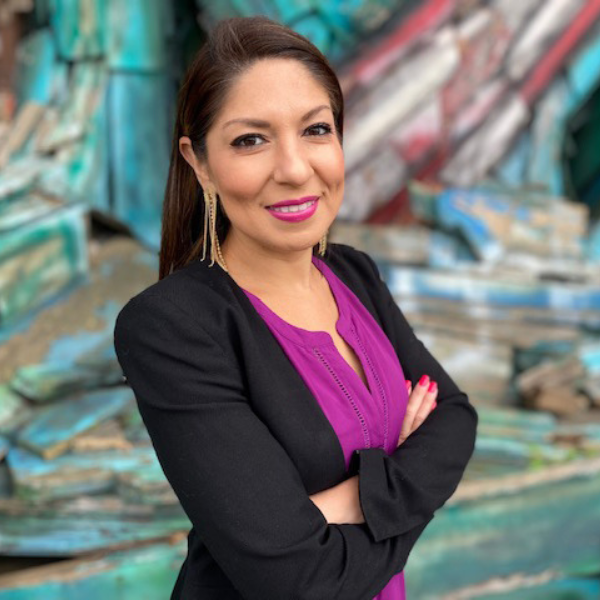
Liz Herrera is a Gallup-Certified Strengths Coach, experienced career development leader, and the Director of Career Development for the College of Liberal Arts and Sciences at the University of Illinois Chicago. She is also the founder of Liz Career Coaching, LLC and host of the Liz Career Coaching Podcast where she supports professionals and job seekers to gain clarity and confidence in designing their career and launching their job search.