
We Broke the BDR/AE Structure. Here’s How AI Fixes It.
By Scott Stringfellow
The End of a Playbook
In 2022, I watched a sales playbook that had worked flawlessly for years just…stop working.
The “growth at all costs” era died in real time. Investors suddenly wanted “efficient growth.” The revolving door of BDRs wasn’t sustainable anymore. And the batch-and-blast tactics that had driven pipeline for a decade became obsolete overnight.
Every sales leader I know made the same pivot: “Okay, it’s quality over quantity now. No more generic templates. We need deep research, personalized messaging, consultative outreach.”
And they were right. The market had spoken. Buyers would only engage with sellers who delivered ultra-relevant, timely insights.
But here’s what nobody wants to admit: We’d already built an organizational structure that makes this impossible to execute.
We specialized our sales roles to create an assembly line—and it worked great when batch-and-blast was acceptable. But now that the market demands “right message, right buyer, right time,” we’ve discovered something uncomfortable:
Few BDRs have enough experience to do the research the market now requires.
And we can’t put prospecting mostly on AE shoulders—they need to focus on closing deals.
We’re stuck choosing between three bad options—and this isn’t a training problem or a tool adoption problem. It’s a structural problem.
We’re stuck choosing between three bad options—and this isn’t a training problem or a tool adoption problem. It’s a structural problem.
And unfortunately you can’t solve structural problems by giving people more tools and hoping they figure it out.
How We Got Here: The Split That Made Perfect Sense
Let me take you back to how sales teams used to work.
The Old Model: Account Executives handled the full sales cycle—prospecting, qualification, demos, closing. It was inefficient but straightforward. The person who closed the deal did all the work to get there.
Then We Specialized: Someone smart figured out: “Why are we paying expensive AEs to do prospecting work? Let’s break this into an assembly line.”
- BDRs/SDRs specialize in outbound prospecting and initial qualification
- AEs specialize in closing deals
- Everyone focuses on their specific function
And it worked brilliantly…in the batch-and-blast era.
When you could send 500 emails from one domain and get 85 to 90% deliverability with double-digit reply rates, BDRs didn’t need deep experience. The playbook was simple:
- Send X emails per day from templates
- Make Y cold calls from scripts
- Book Z meetings
- Hand qualified leads to AEs
A junior person could learn this in a few weeks. It was repeatable, scalable, and economically efficient.
Then the market fundamentally changed.
Email deliverability collapsed. Now you’re limited to 5 to 15 sends per mailbox per day if you want to avoid spam filters. Open rates dropped to 27%. Reply rates fell to 1 to 2% if you’re lucky.
And buyers got sophisticated. They can spot automation and generic outreach instantly—and they ignore it.
The new requirement? Deep research. Specific insights. Perfect timing. Messages that prove you understand their business situation better than generic competitors do.
Suddenly, our specialized assembly line became a structural liability.
SUBSCRIBE TO OUR FREE NEWSLETTER
The Structural Problem: An Impossible Choice
Here’s the tension that keeps sales leaders up at night:
What the market now demands:
- 30-45 minutes of research per prospect
- Understanding business signals and their implications
- Crafting consultative, insight-driven messages
- Identifying the exact moment when pain becomes urgent
Who’s BEST at doing this: Account Executives. They have the experience to:
- Spot what matters in company signals
- Understand product fit deeply
- Synthesize implications consultatively
- Craft messages that resonate with senior buyers
BDRs can do some of this work, but AEs are simply better at it—they’ve lived through more deals, understand the product more deeply, and know what resonates.
But we can’t put prospecting mostly on AE shoulders: Sure, AEs can do some strategic, relationship-based prospecting. But if they’re spending most of their time on research and outbound, then:
- Deals don’t get the attention they need
- Your most expensive resources are doing top-of-funnel work
- Pipeline suffers when AEs are researching instead of closing
So we try to have BDRs do it: But BDRs are 6 to 12 months into their sales careers. They’re still learning:
- What signals actually matter vs. noise
- How to spot urgent pain vs. general interest
- What messages resonate with different personas
- How to sound consultative instead of scripted
They can’t maintain the level of research intensity and insight quality that the market now demands. It’s not their fault—they’re just not experienced enough yet.
So we’re stuck choosing between three bad options:
- Put research mostly on AE shoulders → Deals suffer, expensive use of time
- Have BDRs do it → Quality suffers, messages don’t land
- Go back to templates → Reply rates of 1 to 2%, best prospects never respond
None of these options work. And this is the trap most sales organizations are in right now.
Why Giving Reps AI Tools Doesn’t Fix the Structure
Most companies saw this tension and thought: “AI will solve this! We’ll give reps access to ChatGPT, Clay for data enrichment, AI-powered email writers. Now BDRs can do deep research faster!”
I made this exact mistake. Gave the team tools, sent training materials, tracked adoption metrics.
But here’s what you’re actually asking them to do:
You’re asking every BDR to figure out their own AI workflow. To learn how to:
- Use multiple tools across different platforms
- Write effective prompts (a skill in itself)
- Synthesize information into consultative insights
- Build their own research process from scratch
It’s like asking everyone to learn how to ride a bike they’ve never seen before—and then punishing them when they don’t get it right.
That’s the real issue with distributed AI adoption. You’re not just asking for tool usage—you’re asking each individual to become an AI workflow architect while also hitting their quota.
Why would you have five people independently figure this out when one centralized expert could build it once for everyone?
That’s the real issue with distributed AI adoption. You’re not just asking for tool usage—you’re asking each individual to become an AI workflow architect while also hitting their quota.
And when they inevitably struggle or take shortcuts, you tell yourself it’s an adoption problem. It’s not. You’ve given them an impossible job.
What Strategic AI Actually Fixes: Intelligence Moves to the System
Look, I’ll be honest. It took me 18 months of trial and error to figure out what actually works.
The breakthrough wasn’t better AI tools for reps. It was realizing that intelligence needs to live in the system, not in individuals.
Instead of asking everyone to build their own AI workflows, you build it once, centrally, and systematically deliver the insights to the team.
Here’s what changes:
The AI Does What AEs Are Best At (But Can’t Scale):
- Monitors thousands of accounts 24/7 for critical business events
- Spots signals that indicate urgent pain: funding rounds, executive changes, rapid hiring
- Synthesizes the implication: “Company just posted 3 VP-level jobs in 2 weeks = scaling fast = infrastructure strain”
- Surfaces it directly in the CRM with full context
BDRs Focus on Conversations (With Perfect Context): Instead of spending 60-70% of their time on research they’re not experienced enough to do well, they:
- Pick up the phone knowing exactly why they’re calling
- Lead with: “I noticed you’re scaling fast—just posted 3 VP roles this month. Companies at this stage usually run into [specific problem]. Is that on your radar?”
- Spend 90% of their time having consultative conversations
- Only call prospects experiencing acute pain right now
AEs Focus Entirely on Activities Closest to Revenue:
- Working deals, not prospecting
- Every lead that reaches them has been systematically researched and qualified
- They can do some strategic, relationship-based outreach when it makes sense—but it’s not carrying the load
The BDR role doesn’t disappear—it evolves.
It goes from: “Figure out your own AI workflow and maintain research intensity you’re not experienced enough to deliver,” to: “Have consultative conversations with perfect context that a centralized system provides”
Companies implementing this approach are seeing 2.5 times higher revenue growth according to Accenture’s research—not because of productivity gains, but because they’ve fixed a fundamental structural problem.
The numbers:
Before, the BDR would spend 30 minutes researching per prospect, make 10 calls per day and book 3 to 4 meetings per week Now AI researches 1,000 accounts simultaneously, the BDR makes 30 calls per day with perfect context and books 8 to 10 meetings per week
Companies implementing this approach are seeing 2.5 times higher revenue growth according to Accenture’s research—not because of productivity gains, but because they’ve fixed a fundamental structural problem.
SUBSCRIBE TO OUR FREE NEWSLETTER
The Uncomfortable Truth
You built an organizational structure that made sense in 2018. The market fundamentally changed in 2022. The structure didn’t adapt.
The work that needs to be done now—deep research, insight generation, perfect timing—requires experience your BDRs don’t have and time your AEs can’t spare.
This isn’t a training problem. It’s not an adoption problem. It’s a structural problem.
And you can’t solve structural problems by giving people more tools and hoping they each figure it out on their own.
The companies that will dominate the next decade aren’t the ones with the best AI tools for their reps. They’re the ones who recognized that intelligence needs to live in the system, not in individuals—and rebuilt their structure accordingly.
Later never comes.
The companies fixing this now—moving intelligence from individuals to systems, building it once instead of asking everyone to figure it out, letting every function operate in its highest-value zone—those are the ones that will win.
The ones still hoping that better training or better tool adoption will make the current structure work?
They’re about to find out what it feels like to get lapped.
Share this on:
About Scott Stringfellow
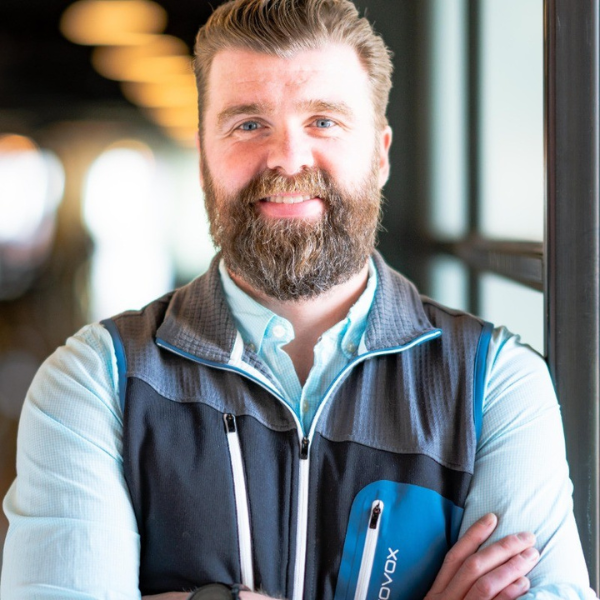
Scott Stringfellow is the founder of NewGTM.ai, a company focused on modernizing outbound sales and go-to-market strategies with the power of artificial intelligence. He is recognized for helping organizations build top-tier go-to-market teams and for driving business growth with cutting-edge digital transformation initiatives. Drawing from 20 years of sales experience, he builds impactful strategies for implementing the latest sales technologies and playbooks to help teams use these tools to hit and exceed goals.