
Public Relations at a Crossroads: Charting a Way Forward in the Age of AI
With Public Relations Expert, Stephen Waddington
Stephen Waddington shares his thoughts on the impact of AI on public relations and how unglamorous research, conversations, and engagement are still the best path forward.
You originally trained as an engineer. What prompted the transition to public relations? What did you learn in engineering that you’ve found transferable?
I moved from engineering into trade journalism, covering technology. I became more interested in the stories about technology than the technology itself. Public relations was a
natural next step.
Engineering taught me systems thinking and a respect for evidence and measurement. Both are sorely needed in public relations.
What was your proudest accomplishment during your presidency at the Chartered Institute of Public Relations (CIPR) in 2014?
Returning the organization to its roots of professionalism as set out in its Royal Charter and modernize the Chartered accreditation process.
The CIPR exists to advance the profession and not just serve members as a professional body.
It’s a slow burn.
SUBSCRIBE TO OUR FREE MONTHLY NEWSLETTER
Have any authors or speakers fundamentally challenged your perspective on public relations and where it’s headed?
Ansgar Zerfass and the European Communication Monitor team shifted my thinking from what public relations should be to what strategic communications looks like in practice.
Ralph Tench, my co-editor on Exploring Public Relations and Management Communication,
has taught me to think critically about the profession I’d spent decades practising.
Lee Edwards, Jacquie L’Etang and Johanna Fawkes keep us honest on ethics and the gray area between management and manipulation.
Based on your experiences, what is one of the most common mistakes agency founders make?
Building around client service at the expense of building a business. You end up with something entirely dependent on the founders’ relationships that can’t scale.
Invest in management capability, replicable processes and a plan for what the business becomes when you step back.
What’s a recent public relations campaign that you found particularly forward thinking?
The most forward-thinking work isn’t what most people would recognize as a campaign.
Organizations dealing with complex stakeholder environments such as the National Health Service (NHS) Trusts are building ongoing programs of engagement rather than episodic media coverage.
This work rarely wins awards but it’s proper strategic public relations.
Practice has become so enamored with digital dashboards that we’ve forgotten the fundamentals of listening as a means of research.
What is an underrated method for understanding public sentiment?
Qualitative research with actual stakeholders.
Sitting down and having structured conversations about perceptions, concerns and needs. It’s slow and expensive, but it tells you things sentiment analysis cannot.
Practice has become so enamored with digital dashboards that we’ve forgotten the fundamentals of listening as a means of research.
What parallels do you see between social media’s disruption of public relations and AI’s disruption today? Where are they dissimilar?
Both triggered a scramble to bolt new tools onto existing workflows without thinking through the structural implications.
The critical difference: social media disrupted distribution, while AI disrupts production.
When machines can produce competent tactical output at negligible cost, the executional layer of public relations practice becomes a commodity. That’s more fundamental.
How should businesses face a skeptical public?
You cannot communicate your way out of a behavioural problem.
Start from relationship management, not reputation management. Ask what stakeholders need from you rather than how you want to be perceived.
Trust is earned through consistent behavior over time, not through communications campaigns.
What challenges are universities facing in preparing students for public relations careers?
Single honors public relations degrees have nearly disappeared. The theory-practice gap is real and persistent.
Universities compete with professional bodies as education providers, creating tension around who defines what practitioners need to know.
The relationship should be complementary, not competitive. It isn’t unfortunately.
How do we build a future generation of public relations leaders without clear career paths?
If AI eliminates the tactical work juniors cut their teeth on, what does the entry level and mid-level career look like? We need to bring people into strategic work earlier and deliberately widen access.
That’s why Sarah Waddington and I founded Socially Mobile. Stop wringing hands about the talent pipeline and invest in it.
Share this on:
About Stephen Waddington
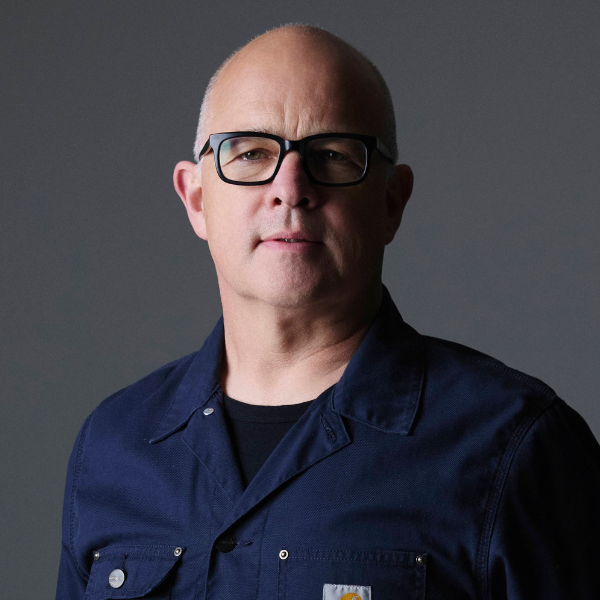
Stephen Waddington is a professional advisor at Wadds Inc. and PhD researcher at Leeds University Business School who supports agencies and in-house teams on a range of management, corporate communications, and public relations issues.